
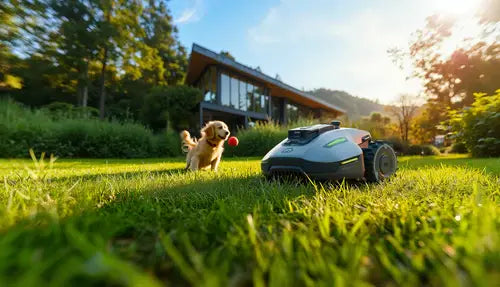

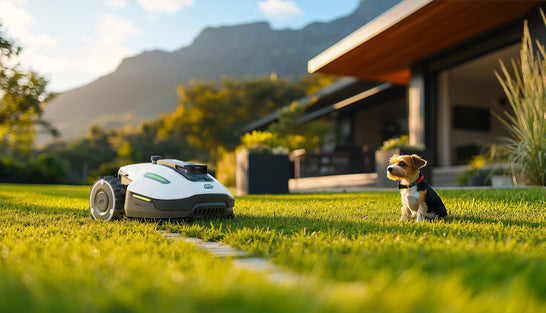
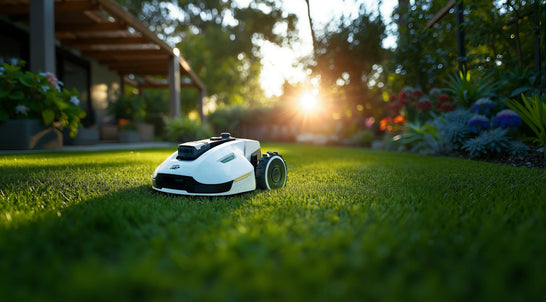
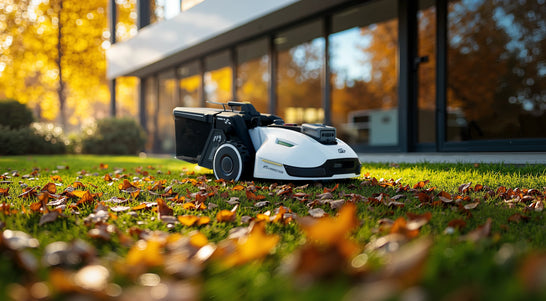
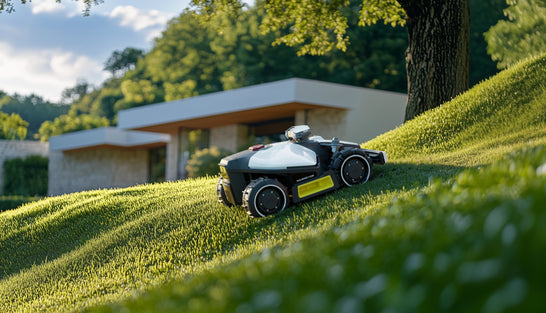

As robot lawn mowers move toward fully autonomous, wire-free operation, navigation technology has become the key factor determining real-world performance. Today, three main systems dominate the market: AI Vision, RTK GPS, and LiDAR. Each approaches navigation differently—through “visual perception,” “precise positioning,” or “environmental mapping”—and each comes with unique advantages and limitations.
For Australian homeowners, understanding these differences is essential. Choosing the right navigation technology can mean the difference between smooth, worry-free mowing and frequent interruptions due to missed boundaries, obstacles, or signal issues. Marketing claims often blur these distinctions, making it hard to know which system truly fits your lawn.
This article will compare AI Vision, RTK, and LiDAR from a practical perspective—how they work, their strengths and weaknesses, and which types of lawns benefit most from each. The aim is simple: empower Australian homeowners to make informed decisions based on real-world performance, not just the specs.
Overview of AI Vision, RTK, and LiDAR Navigation Technology
Before diving into performance comparisons, it’s important to understand the basic principles of these three navigation systems. Each solves a different navigation challenge for robot mowers, and that difference determines how they perform in real lawns.
1. AI Vision: Seeing and Understanding the Lawn
AI Vision uses cameras combined with computer vision algorithms to interpret the environment. Unlike systems that rely on fixed coordinates, mowers with AI Vision analyze visual data—such as color, texture, shape, and movement—to understand what’s ahead.
AI Vision mowers typically can:
- Recognize lawn edges and garden boundaries
- Detect and classify obstacles like pets, toys, or garden furniture
- Adapt dynamically to changes in the yard
AI Vision excels at context awareness, but performance depends on lighting, visibility, and camera quality. Currently, few robot mowers rely solely on visual navigation. For example, Mammotion’s YUKA mini 800 uses a triple-camera AI Vision system, offering enhanced navigation accuracy.

2. RTK GPS: Precise Positioning Through Satellites
RTK (Real-Time Kinematic) GPS focuses on absolute positioning. By correcting standard GPS signals with reference data, RTK achieves centimetre-level accuracy.
RTK mowers are particularly effective at:
- Maintaining precise mowing paths
- Handling large, open lawns
- Defining virtual boundaries digitally
However, RTK performance can decline in areas with poor satellite visibility, such as under dense trees or near tall buildings. Many systems still rely on RTK base stations, though some brands now offer NetRTK solutions. In Australia, RTK coverage is improving, but remote or heavily treed areas may still face limitations.
3. LiDAR: Measuring the Environment in 3D
LiDAR uses laser pulses to map the surroundings in three dimensions. Unlike visual systems, it doesn’t depend on light or color, making it highly reliable in shaded or low-light conditions.
LiDAR is especially good at:
- Accurate obstacle detection
- Navigating complex or cluttered gardens
- Maintaining consistent performance regardless of lighting
Its main limitation is that LiDAR can detect shapes but cannot classify objects on its own, unless combined with AI Vision.
Head-to-Head Comparison: AI Vision vs RTK vs LiDAR
To understand which system performs best, it helps to compare them across key factors such as boundary accuracy, obstacle handling, reliability, and setup. Each technology offers different strengths depending on the lawn environment.
Quick Comparison Table
|
Feature |
AI Vision |
RTK GPS |
LiDAR |
|
Boundary Accuracy |
Medium–High |
Very High |
High (local) |
|
Obstacle Detection |
Excellent |
Limited |
Good |
|
Performance in Shade |
Moderate |
Poor–Moderate |
Excellent |
|
Ease of Setup |
Low |
High |
Medium |
|
Best Lawn Type |
Small–medium, dynamic gardens |
Large, open lawns |
Shaded, cluttered, irregular lawns |
This table shows that while all three systems enable wire-free navigation, their real-world performance differs depending on conditions typical in Australian backyards.
1. Accuracy and Boundary Precision
- RTK GPS provides the highest absolute positioning accuracy, often within 1–2 cm, making it ideal for well-defined virtual boundaries and perfectly straight mowing lines.
- LiDAR delivers excellent relative accuracy by mapping nearby surfaces in 3D, though it does not provide global positioning on its own.
- AI Vision relies on visual cues instead of coordinates, giving flexible boundary detection but slightly less consistent edge precision.
Summary: RTK = precision, LiDAR = local spatial accuracy, AI Vision = adaptability.
2. Obstacle Detection and Safety
- AI Vision excels at recognising and classifying obstacles, such as pets, children, toys, or garden furniture, allowing the mower to react appropriately.
- LiDAR reliably detects the presence and shape of objects but cannot identify them without a vision system.
- RTK offers minimal obstacle awareness and depends heavily on secondary sensors to avoid collisions.
3. Environmental Reliability
- LiDAR performs consistently under shade, low-light conditions, or beneath tree cover—common scenarios in Australian suburban gardens.
- RTK works best in open areas but can struggle with signal loss in dense vegetation or near tall structures.
- AI Vision’s performance is influenced by lighting, shadows, and weather conditions, which can be variable across different Australian regions.
4. Setup Complexity and Flexibility
- AI Vision systems generally require the least setup and adapt well to changing garden layouts.
- RTK systems often need base stations or strong correction signals to function at peak accuracy.
- LiDAR systems sit in the middle—offering good flexibility but requiring more complex hardware than vision-only solutions.
Key Takeaway
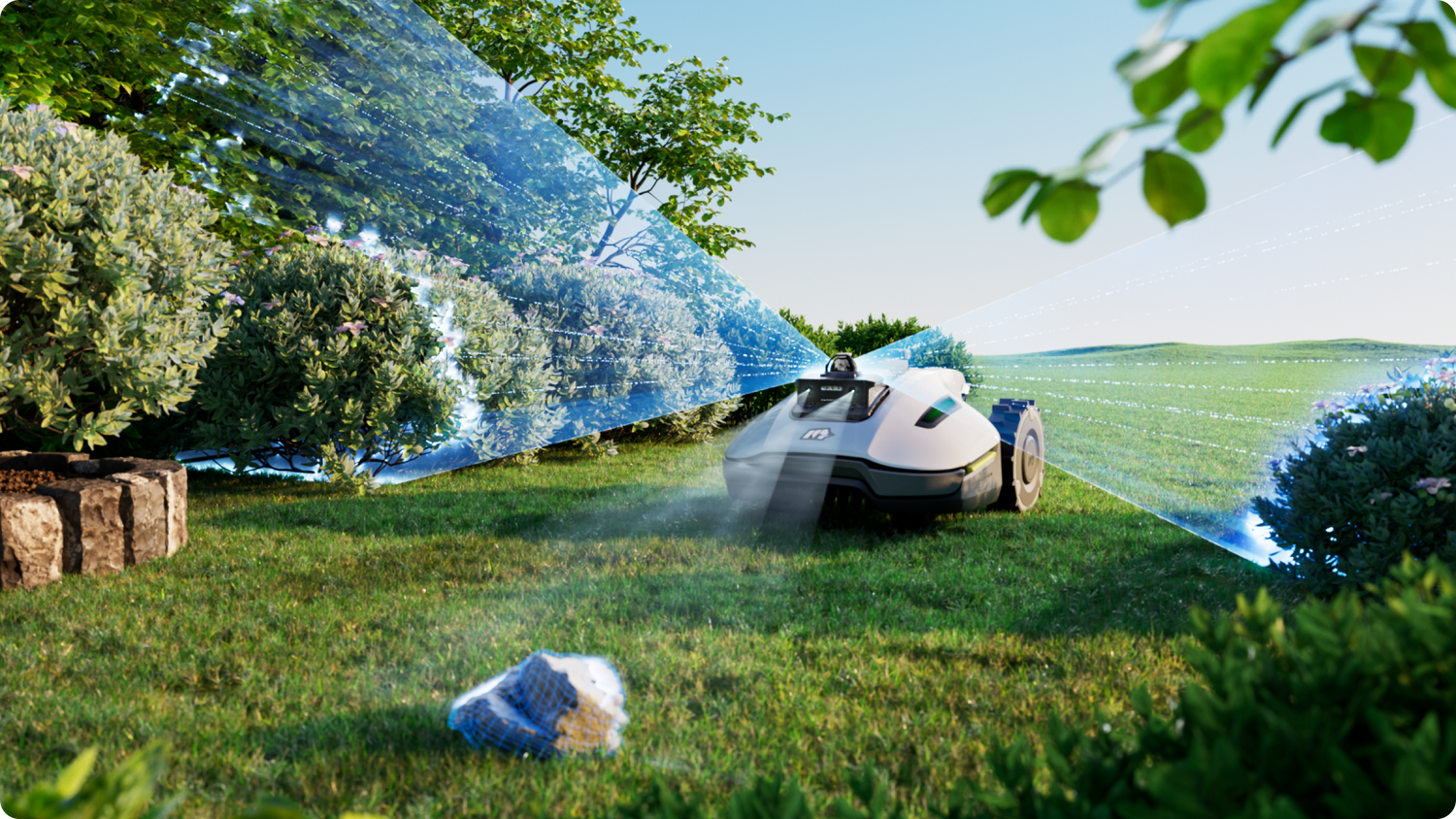
Most modern robot mowers now combine two or more of these technologies, such as AI Vision + RTK or AI Vision + LiDAR. Mammotion even integrates all three (Vision, RTK, LiDAR) in a “Tri-Fusion” system, enabling seamless switching between sensors to handle diverse lawn conditions.
Hybrid and Sensor Fusion Navigation Systems: Why One Technology Isn’t Enough
As robot lawn mowers are expected to handle increasingly complex gardens, most manufacturers are moving away from single-sensor solutions. Today’s advanced models often use hybrid systems that combine AI Vision, RTK GPS, and/or LiDAR into a single navigation framework.
The reason is straightforward: each technology addresses a different challenge. By integrating multiple systems, a mower can operate more reliably across the varied conditions common in Australian gardens—from small inner-city lawns to larger suburban plots with trees, shade, and furniture.
How Sensor Fusion Works
Sensor fusion enables a mower to:
- Use RTK GPS for precise positioning in open areas
- Rely on LiDAR for accurate 3D mapping in shaded or cluttered zones
- Apply AI Vision to understand the environment, classify obstacles, and make decisions
Rather than operating each sensor independently, modern systems continuously evaluate which input is most reliable at any moment, adjusting navigation in real time.
1. AI Vision + RTK Systems
This combination is common in premium wire-free mowers:
- RTK provides highly accurate virtual boundaries and mowing zones
- AI Vision handles obstacle detection, lawn-edge recognition, and safety
This setup works particularly well for larger Australian lawns with some visual complexity, though dense tree cover can still challenge GPS accuracy.
2. AI Vision + LiDAR Systems
LiDAR adds geometric certainty where vision alone might struggle:
- LiDAR maintains consistent distance measurements in low light or under heavy shade
- AI Vision adds the ability to identify pets, children, or objects
This pairing is ideal for irregular, cluttered, or partially shaded gardens, which are common in Australian backyards with native trees or complex landscaping.
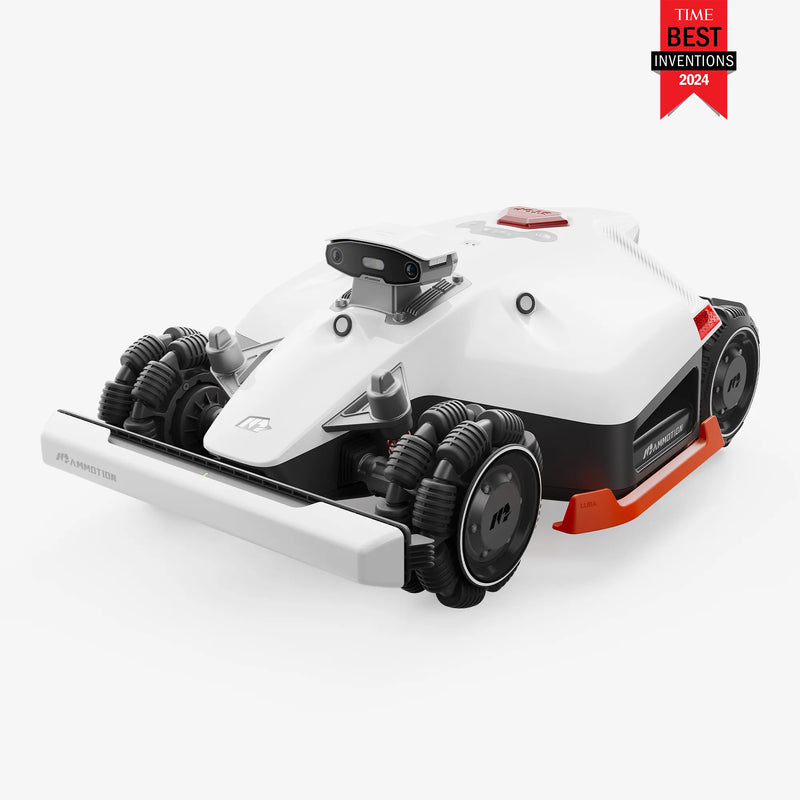
3. Mammotion Tri-Fusion Navigation Systems
Mammotion now offers systems that integrate Vision, RTK, and LiDAR. These mowers can dynamically shift between sensors depending on the mowing conditions:
- AI Vision serves as the decision-making layer
- RTK and LiDAR provide spatial grounding and precision
Key Insight: The future of robot mower navigation isn’t about choosing AI Vision vs RTK vs LiDAR—it’s about combining them intelligently. Sensor fusion significantly improves safety, autonomy, and consistency across diverse lawn conditions.
Best Use Cases: Choosing the Right Navigation Technology for Your Lawn
Knowing the strengths and limitations of AI Vision, RTK GPS, and LiDAR is only useful if it helps homeowners pick the right mower for their garden. Here’s how each system performs in real-world scenarios typical of Australian lawns.
1. AI Vision: Dynamic, Residential Gardens
AI Vision works best in yards where adaptability and obstacle awareness are key:
- Small to medium-sized lawns with irregular shapes
- Gardens with pets, children, or frequently moved furniture
- Lawns with flowerbeds, toys, or outdoor decor that changes often
Why it works: Vision allows the mower to identify and classify obstacles, adjusting its route dynamically without needing perimeter wires. This makes it ideal for suburban Australian backyards where layouts change regularly.
2. RTK GPS: Large, Open Lawns
RTK GPS is most suitable for lawns where precision and straight-line mowing matter:
- Large, open lawns with few trees or shade
- Gardens requiring exact virtual boundaries
- Homeowners seeking perfectly straight mowing lines for a polished look
Why it works: RTK delivers centimetre-level accuracy, ensuring complete coverage across bigger properties—common in regional or outer-suburban Australia.
3. LiDAR: Shaded, Cluttered, or Complex Lawns
LiDAR shines in more challenging environments:
- Lawns with dense trees or shaded areas
- Gardens with complex, non-moving obstacles like rocks, garden furniture, or sculptures
- Irregularly shaped yards that require detailed spatial mapping
Why it works: LiDAR measures distances precisely, regardless of lighting, and produces a reliable 3D map of the mowing area, perfect for shaded or cluttered Australian gardens.
4. Hybrid & Sensor Fusion Systems: All-Round Autonomy
For homeowners with diverse lawns—combining shade, obstacles, and irregular shapes—hybrid systems that integrate Vision, RTK, and LiDAR are the most dependable:
- The mower dynamically selects the most suitable sensor input in real time
- Ensures safe, efficient, and consistent mowing across all conditions
Key Takeaway: No single technology fits every lawn. AI Vision is best for adaptability and obstacle intelligence, RTK excels over large open spaces, and LiDAR dominates in shaded or cluttered gardens. Sensor fusion combines these strengths, delivering the most reliable and autonomous performance.
Final Thoughts
AI Vision, RTK GPS, and LiDAR each offer unique benefits for robot lawn mower navigation, but no single technology is perfect for every lawn.
For Australian homeowners seeking maximum reliability and autonomy, hybrid or sensor fusion systems—combining Vision, RTK, and LiDAR—are increasingly the benchmark. These systems take advantage of the strengths of each technology, ensuring safe, efficient, and intelligent mowing across a variety of garden conditions.
Ultimately, the best choice depends on your lawn’s size, shape, and complexity, as well as how much autonomy you want from your mower. Understanding how each navigation system works allows homeowners to make informed decisions and enjoy hassle-free lawn care, whether in a small suburban backyard, a shaded garden, or a large open property.
