


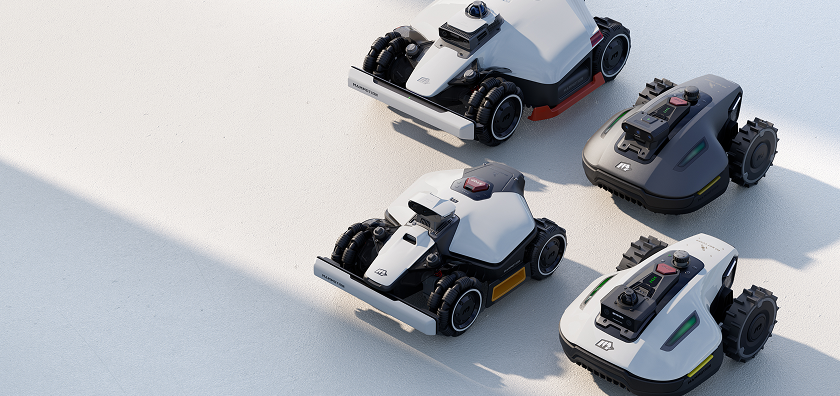


Artificial Intelligence is transforming robotic lawn mowers from basic automated machines into smart, autonomous lawn care systems. By combining machine learning, computer vision, and advanced sensors, AI enables mowers to perceive their surroundings, make decisions in real time, and adapt to changing conditions without human intervention.
Modern AI-powered mowers can identify obstacles, learn the layout of a lawn, optimise mowing routes, and even adjust their behaviour according to seasonal growth or local weather conditions. Beyond navigation, AI enhances user experience with smart apps and home integration, allowing personalised schedules, predictive maintenance, and coordination with other connected devices.
In this article, we’ll explore how AI improves robot lawn mowers in practice—from navigation and obstacle detection to sensor fusion, adaptive behaviour, and smart home integration—showing how AI makes lawn care safer, more efficient, and increasingly autonomous for Australian homes.
Key AI Applications in Robot Lawn Mowers
Artificial Intelligence allows robotic mowers to autonomously map lawns, avoid obstacles, and optimise mowing paths. By integrating sensors, GPS, and smart home features, they adapt to changing conditions and deliver reliable lawn care with minimal human involvement.
💡 Key AI Applications Overview
- Smart Navigation & Mapping: AI vision, LiDAR, and GPS enable precise lawn mapping and route planning—no boundary wires required.
- Real-Time Obstacle Avoidance: Detects both stationary and moving objects, like garden furniture, pets, or people, for safer mowing.
- Adaptive Learning & Efficiency: Learns the lawn layout, reduces overlap, and continuously optimises mowing routes.
- Sensor Fusion Precision: Combines AI Vision, LiDAR, and RTK GPS for accurate performance in complex environments.
- Smart Control & Integration: Supports weather-based scheduling, app control, and smart home integration for hands-free lawn care.
1. AI-Powered Navigation and Mapping
One of the most transformative applications of AI in robot lawn mowers is navigation and mapping. Traditional mowers often relied on perimeter wires or pre-set paths, limiting flexibility and requiring manual setup. AI allows mowers to understand and navigate gardens autonomously, learning the layout and adapting over time.
1) Digital Mapping and SLAM
Modern AI mowers use computer vision, LiDAR, and sensor data to build detailed digital maps of a lawn. Many systems use SLAM (Simultaneous Localisation and Mapping) algorithms, enabling the mower to:
- Track its position in real time
- Identify obstacles and garden boundaries
- Plan efficient mowing routes
As the mower repeats mowing cycles, it continuously refines its map, improving coverage and reducing redundant passes—saving time, energy, and wear on the machine.
2) Boundary-Free Operation
AI vision enables wire-free mowing, allowing the mower to detect edges, fences, garden beds, and irregular shapes without physical barriers. This is particularly useful for:
- Irregularly shaped lawns
- Gardens with movable furniture or seasonal decorations
- Homeowners who prefer minimal setup and maintenance
By combining intelligent perception with adaptive route planning, AI-powered navigation ensures consistent, precise, and autonomous mowing across a wide range of real-world conditions, including the varied gardens found across Australian suburbs.
2. Obstacle Detection and Avoidance

AI gives robotic lawn mowers the ability to perceive and understand their surroundings, allowing them to detect, classify, and respond to obstacles in real time. This is a major improvement over older systems that relied only on bumpers or basic infrared sensors.
1) Static Obstacles
Static objects such as trees, garden furniture, fences, and flower beds can be challenging for traditional mowers. AI-powered mowers use vision and sensor fusion to accurately identify these objects, enabling them to:
- Navigate around obstacles without collisions
- Maintain precise cutting patterns along edges
- Adapt to changing garden layouts, such as seasonal decorations or moved furniture
2) Dynamic Obstacles
Dynamic obstacles—like pets, children, or toys—require instant decision-making. AI vision allows the mower to:
- Detect moving objects in its path
- Classify objects to decide whether to slow down, stop, or reroute
- Keep the garden safe for family members and pets
- Safety and Reliability
By combining real-time perception with intelligent decision-making algorithms, AI-powered mowers significantly reduce the risk of collisions and accidents. They offer safer, more reliable operation compared with traditional sensor-only systems, making them well-suited for Australian households where children, pets, and outdoor activities are common.
3. Adaptive Behaviours and Optimising Routes
AI doesn’t just help robotic lawn mowers navigate and avoid obstacles—it allows them to learn from experience and adapt for optimal performance. This self-learning capability is what sets modern AI-powered mowers apart from traditional automated systems.
1) Learning Lawn Layouts
AI tracks mowing history and remembers lawn boundaries, obstacles, and preferred paths. Over repeated cycles, the mower:
- Refines its digital map for improved coverage
- Reduces redundant passes and ensures even cutting across the entire lawn
- Adapts to irregular shapes or changes in garden layout
2) Optimising Routes and Efficiency
AI analyses patterns to plan the shortest, most energy-efficient mowing routes. It can:
- Adjust in real time if obstacles appear or conditions change
- Modify speed and cutting patterns based on lawn size, shape, and terrain
- Ensure consistent, high-quality results without human intervention
3) Environmental Adaptation
AI can respond to seasonal changes, such as overgrown patches, newly planted flower beds, or shaded areas. The mower:
- Automatically handles irregular or dynamic landscapes
- Learns which areas require more frequent attention
- Optimises mowing schedules to suit both lawn health and efficiency
Summary: AI-powered adaptive behaviour ensures that robotic mowers continuously improve, providing efficient, precise, and hands-free lawn care across diverse garden conditions common in Australia.
4. Sensor Fusion and Hybrid AI Systems
While AI Vision alone offers impressive autonomy, combining multiple sensors creates hybrid systems that maximise reliability, precision, and adaptability. This integration, often called sensor fusion, allows robotic lawn mowers to leverage the strengths of each technology while compensating for their individual limitations. (AI Vision vs. RTK vs. LIDAR of robot lawn mower)
1) AI Vision + LiDAR
Pairing AI vision with LiDAR improves spatial awareness and obstacle detection:
- LiDAR maps the environment in 3D, even in low light or shaded areas
- AI Vision adds semantic understanding, identifying whether obstacles are toys, furniture, or pets
Together, they allow precise navigation in complex or cluttered Australian gardens, ensuring safe operation around trees, garden beds, and outdoor furniture.
2) AI Vision + RTK GPS
Combining AI Vision with RTK GPS provides centimetre-level positional accuracy:
- RTK GPS keeps the mower on course, ideal for large lawns with clearly defined boundaries
- AI Vision handles obstacle detection, lawn-edge recognition, and dynamic decision-making
This combination suits homeowners who want high accuracy without sacrificing adaptability, particularly on bigger suburban or regional properties.
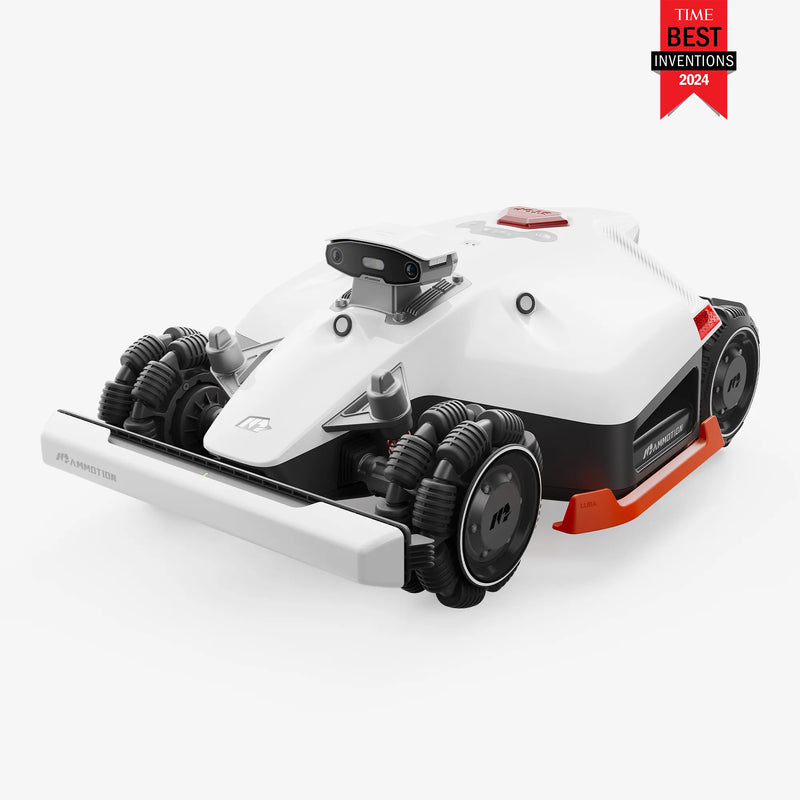
3) Mammotion Tri-Fusion Systems
Some premium brands, like the Mammotion Tri-fusion System, already integrate Vision + LiDAR + RTK GPS into a single system:
- Vision interprets the environment and guides decision-making
- LiDAR maps objects and terrain in 3D
- RTK GPS provides global positional accuracy
This multi-sensor approach ensures highly autonomous, safe, and efficient operation, even in shaded areas, irregular lawns, or gardens with moving obstacles—conditions common in many Australian homes.
Key Insight: The future of AI in robotic lawn mowers is not about choosing a single sensor, but combining them intelligently. Sensor fusion maximises safety, autonomy, and efficiency across diverse garden conditions.

5. Smart App Control and Home Integration
AI in robot lawn mowers isn’t limited to navigation and obstacle avoidance. It also powers user-facing features that make lawn care more convenient, personalised, and connected to modern Australian homes.
1) Smart App Control
AI-driven mobile apps act as the central control hub for the mower, allowing homeowners to:
- Create intelligent mowing schedules based on lawn growth, weather forecasts, and personal preferences
- Monitor mower status in real time, including battery levels, blade condition, and coverage progress
- Receive predictive maintenance alerts, helping prevent issues before they affect performance
- Adjust mowing routes dynamically if temporary obstacles, pets, or garden changes appear
These features reduce hands-on management while ensuring consistent mowing results.

2) Smart Home Integration
Many AI-powered mowers can integrate with popular smart home ecosystems commonly used in Australia:
- Voice control via platforms such as Google Home or Alexa
- Coordination with smart irrigation systems, pausing mowing during watering cycles or rain
- AI-based scheduling also optimises energy use and lawn health by responding automatically to weather conditions and seasonal growth patterns.
Emerging AI Applications in Robotic Lawn Care
AI in robotic lawn mowers is expanding beyond basic navigation and obstacle avoidance into intelligent lawn management. These emerging capabilities are making mowing smarter, more sustainable, and increasingly environmentally aware.
1. Grass and Lawn Health Monitoring
AI-powered mowers can analyse grass growth, density, and colour patterns across the lawn. Using this data, the system can:
- Provide useful insights to homeowners through companion apps
- Automatically adjust mowing frequency or patterns based on lawn condition
- Support data-driven lawn care decisions without manual assessment
Over time, this lays the foundation for smarter, more responsive lawn maintenance.
2. Ecological and Sustainable Lawn Management
AI also plays a role in promoting environmentally responsible mowing:
- Protects biodiversity zones by avoiding sensitive areas during operation
- Uses adaptive schedules to minimise soil compaction and support healthy grass growth
- Reduces energy consumption and mechanical wear by optimising coverage
These capabilities support sustainable lawn care practices, aligning well with the growing focus on environmental responsibility in Australian households.
Summary: By combining real-time data, machine learning, and adaptive algorithms, AI is turning robotic mowers into intelligent lawn care assistants that prioritise efficiency, lawn health, and sustainability.
Benefits of AI in Robot Lawn Mowers
Artificial Intelligence turns robotic lawn mowers from simple automated tools into intelligent, self-managing lawn care systems. For homeowners, the benefits are clear—greater convenience, improved safety, and better mowing results.
1. Greater Autonomy and Convenience
AI enables robot mowers to operate independently with minimal supervision:
- Eliminates the need for boundary wires or constant manual adjustments
- Allows mowing schedules to be set via apps or voice assistants
- Frees up time by handling routine lawn care automatically
This level of autonomy is particularly appealing for busy Australian households.
2. Improved Safety and Obstacle Handling
With AI vision and sensor fusion, modern mowers can identify both fixed and moving obstacles:
- Reduces the risk of collisions with pets, children, or garden features
- Responds intelligently to unexpected objects in the lawn
- Offers a higher level of safety compared with traditional sensor-based mowers
3. Enhanced Precision and Efficiency
AI continuously improves mowing performance over time:
- Optimises routes to reduce overlap and unnecessary passes
- Maintains clean edges and even coverage
- Learns the lawn layout to deliver consistent results across every cycle
4. Adaptability to Complex Lawns
AI-powered mowers are well suited to diverse lawn conditions:
- Handles irregular shapes, shaded areas, and changing garden layouts
- Adapts to seasonal growth and environmental changes
- Hybrid systems with multiple sensors ensure reliable performance in varied conditions
In short: AI doesn’t just make robot mowers smarter—it transforms lawn care into a safer, more efficient, and hands-free experience, giving homeowners greater peace of mind.
Challenges and Limitations of AI Robot Lawn Mowers
While AI significantly improves robotic lawn mowers, it’s important to recognise the practical limitations of current technology. Understanding these challenges helps set realistic expectations for homeowners.
1. Environmental Factors
AI-based systems can be affected by environmental conditions:
- AI vision may struggle in low light, heavy shade, or extreme weather such as rain or fog
- Variations in grass colour or density can impact visual recognition
- RTK GPS and positioning systems may experience signal disruption near dense trees, tall buildings, or urban environments
Many advanced models now minimise these issues through multi-sensor systems. For example, tri-sensor navigation approaches can significantly reduce environmental interference.
2. Hardware Constraints
Advanced AI hardware comes with trade-offs:
- High-resolution cameras and LiDAR sensors increase system cost and power consumption
- Running AI algorithms requires powerful processors, which can affect battery life
- Sensors must be kept clean and maintained to ensure reliable operation
3. Cost Considerations
AI-powered robotic mowers often sit at the premium end of the market:
- Models with vision, LiDAR, and RTK GPS typically cost more
- Hybrid or tri-sensor systems may be beyond the budget of some households, despite their performance advantages
4. Setup and Learning Curve
Although AI reduces ongoing effort, initial setup may still be required:
- Some systems need an initial mapping or calibration phase
- Users may need time to become familiar with app settings and features to get the best results
Key Insight: Despite these challenges, the advantages of AI—greater autonomy, improved safety, and higher efficiency—often outweigh the limitations, especially as technology continues to advance and prices gradually come down.
Conclusion: AI Is the Intelligence Behind Modern Robot Mowers
Artificial Intelligence is reshaping robotic lawn mowers, turning them from basic automated devices into intelligent, self-directed lawn care systems. From navigation and obstacle recognition to adaptive learning, sensor fusion, and smart app control, AI enables mowers to understand their environment, make informed decisions, and continuously refine their performance with minimal human input.
For homeowners, this translates into safer operation, more precise mowing, and greater efficiency. Advanced AI systems also support predictive maintenance, intelligent scheduling, and environmentally aware lawn management. While challenges remain—such as environmental conditions, hardware demands, and cost—ongoing innovation continues to push the boundaries of what autonomous lawn care can achieve.
Looking ahead, AI-powered robot mowers are set to integrate even more deeply with smart home ecosystems and data-driven lawn management tools. Rather than simple machines, they are evolving into intelligent lawn care assistants that learn, adapt, and improve over time—well suited to the diverse lawn conditions found across Australia.
