

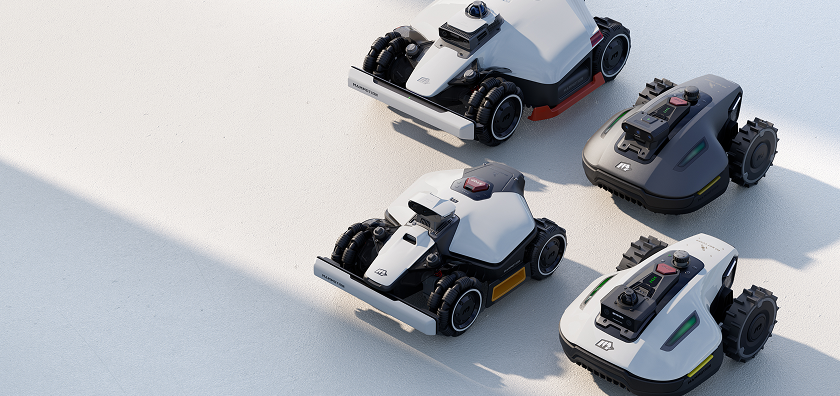

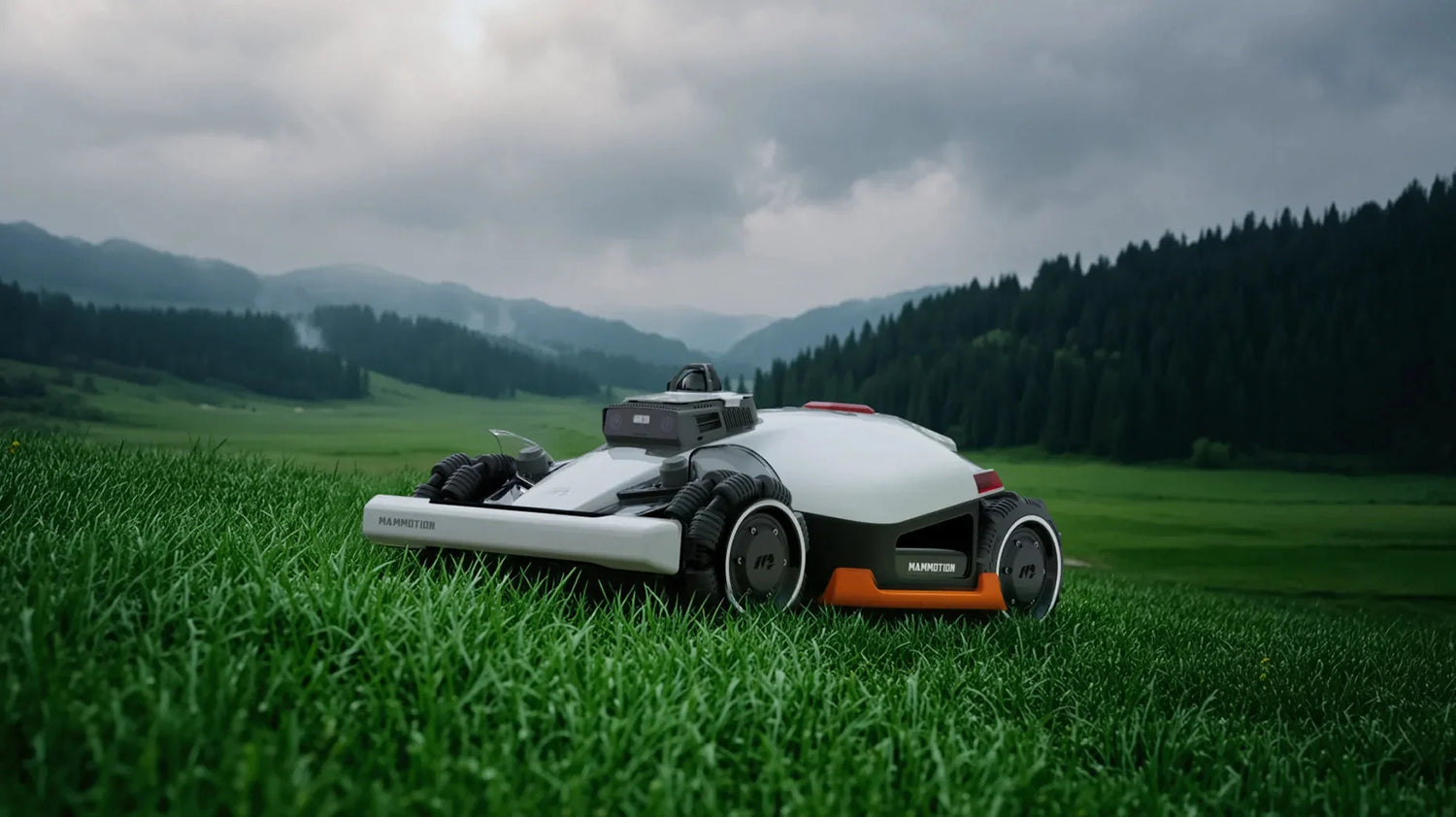
Australia’s sloped and uneven lawns can be difficult to maintain, especially when wet winter conditions reduce traction and make mowing less predictable. Traditional push or ride-on mowers often struggle with wheel slip, uneven cutting, and increased effort on inclines.
Robot lawn mowers have become a practical alternative for many Australian households, offering automated maintenance across different lawn types and terrains. However, not all models perform equally well on slopes. In particular, machines equipped with advanced traction systems such as AWD (All-Wheel Drive) are often better suited to handling challenging gradients and uneven ground.
This guide explains what actually matters when choosing a robot mower for sloped lawns in Australia, and how to identify the right balance of traction, stability, and performance for your yard.
Why Sloped Lawns Are Challenging for Mowing
Sloped and uneven lawns introduce multiple physical challenges that make mowing significantly more difficult than on flat ground. The main issue is not just cutting grass, but maintaining stability and traction across changing terrain conditions.
Traction loss on uneven terrain
One of the most common problems on sloped lawns is wheel slippage. When a mower moves across an incline, gravity reduces effective grip on the surface, making it harder for wheels to maintain consistent contact. This issue becomes more noticeable on uneven ground where pressure is not evenly distributed across all wheels.
In Australia, wet soil conditions can make this even worse. When combined with dense grass like Buffalo, the surface becomes more resistant and slippery at the same time, increasing the likelihood of the mower losing traction or slowing down on inclines.
Impact of grass type on slope performance
Different grass types can significantly affect how a mower performs on slopes. Buffalo grass, for example, is dense and thick, which increases rolling resistance and places more load on the drive system. Kikuyu grass grows aggressively and can create uneven patches that affect stability, while Couch grass tends to be finer but can still become slippery when wet.
These differences mean that slope performance is not determined by incline alone. The interaction between grass density, moisture, and terrain structure plays a major role in how effectively a mower can operate.
How Much Slope Can a Robot Lawn Mower Handle?
Not all robot lawn mowers are designed to handle slopes in the same way. Their performance depends on traction systems, wheel design, and overall stability, especially when conditions become wet or uneven.
While manufacturer specifications provide a useful baseline, real-world performance in Australian lawns often varies due to grass type, soil conditions, and seasonal moisture.
|
Slope Level |
Angle Range |
Typical Performance |
Key Limitations |
Best Use Case |
|
Low Slope |
0–20° |
Most robot mowers operate reliably |
Minimal traction issues |
Flat to gently sloped suburban lawns |
|
Medium Slope |
20–35° |
Performance varies by model |
Possible wheel slip in wet conditions |
Mixed terrain backyards |
|
Steep Slope |
35°+ |
Requires advanced traction systems (e.g., AWD) |
High risk of slippage without strong grip |
Hilly gardens / uneven large lawns |
Why Slope Rating Alone is Not Enough
Even if a robot mower is rated for a specific maximum slope, real-world performance can differ significantly. Factors such as wet soil, dense grass types like Buffalo, and uneven backyard layouts can reduce effective traction.
This is why slope rating should always be considered together with terrain conditions, not as a standalone decision factor.
Key Factors That Affect Robotic Mower Slope Performance
The ability of a robot lawn mower to perform well on sloped or uneven lawns depends on more than just its stated slope rating. In real-world Australian conditions, several mechanical and environmental factors work together to determine overall stability, traction, and cutting consistency.
Traction system and wheel design
Traction is one of the most important factors for slope performance. Mowers with better grip distribution across all wheels are more stable on inclines, especially when grass is wet or soil is soft. Wheel tread pattern and width also play a key role, as deeper and wider treads help maintain contact with the ground and reduce slipping on uneven surfaces.
Weight distribution and center of gravity
A well-balanced mower is less likely to tip or lose traction on slopes. Machines with a low center of gravity tend to remain more stable when moving across inclines, while uneven weight distribution can cause instability, especially when turning on slopes or navigating irregular terrain.
Motor control system
Independent wheel control systems can improve slope performance by adjusting power delivery to each wheel based on terrain conditions. This allows the mower to maintain forward movement even when one side experiences reduced grip. Systems like AWD configurations are typically designed to improve this level of control.
Ground conditions (wet vs dry)
Surface conditions in Australia can vary significantly between seasons. Wet soil reduces friction and increases the risk of wheel slip, while dry ground generally provides better traction. Similarly, thick or damp grass can create additional resistance, making slope navigation more demanding even for higher-end models.
AWD in Robot Lawn Mowers – What It Means and Why It Matters
AWD (All-Wheel Drive) in robot lawn mowers refers to a drive system where power is distributed across all wheels, typically through independent motors rather than a traditional mechanical drivetrain. This setup allows each wheel to contribute to movement and traction based on real-time ground conditions.
Unlike conventional mowing systems that rely on limited wheel drive configurations, AWD systems are designed to improve stability and grip on uneven or sloped terrain, particularly where traction can change frequently due to grass type, moisture, or soil softness.
Why AWD improves slope performance
On sloped lawns, traction is constantly shifting as the mower moves across different angles and surface conditions. AWD systems help reduce wheel slip by distributing power more evenly, allowing the mower to maintain forward momentum even when one or more wheels temporarily lose grip. This makes operation more stable on inclines and helps reduce the chance of getting stuck on uneven ground.
AWD vs traditional drive systems
In traditional drive configurations, only selected wheels are powered, which can limit traction on challenging terrain. When those wheels lose grip, movement can become inconsistent or stalled. AWD systems reduce this limitation by ensuring that all wheels actively contribute to movement, improving overall adaptability on slopes and irregular surfaces.
Important limitation of AWD
While AWD improves traction and stability, it does not eliminate all slope-related challenges. Performance still depends on factors such as grass density, soil moisture, wheel design, and overall mower weight. In extreme slope conditions, even AWD systems may struggle if other supporting factors are not optimal.
Best Robot Lawn Mowers for Slopes in Australia (2026)
Choosing the right robot lawn mower for sloped lawns in Australia depends mainly on your yard size, terrain complexity, and how often the lawn experiences wet or uneven conditions. Below are two recommended options based on typical Australian lawn scenarios.
Best for large or complex sloped lawns
For larger properties, uneven terrain, or steeper slopes, a high-capacity AWD robot mower is generally more suitable. These models are designed to maintain traction and stability across extended mowing areas, even when the ground conditions vary throughout the season.
👉 Recommended model: LUBA 3 AWD Robot Lawn Mower

This model is designed for larger and more demanding lawns, including sloped and irregular terrain. Its AWD system helps improve traction on inclines, while its navigation and cutting system are built for consistent coverage across wide areas.
It is particularly suitable for:
- Large suburban or acreage properties
- Steeper or more complex slopes
- Mixed terrain with wet and dry zones
Best for small to medium sloped lawns
For smaller gardens or medium-sized suburban lawns, a more compact AWD robot mower is often sufficient. These models provide a balance between slope capability and maneuverability, making them suitable for tighter spaces or simpler lawn layouts.
👉 Recommended model: LUBA mini AWD Robot Lawn Mower

The compact design makes it more suitable for residential gardens while still maintaining AWD traction support for moderate slopes and uneven ground conditions.
It is particularly suitable for:
- Small to medium suburban lawns
- Moderate slopes and uneven patches
- Gardens with tighter or more complex layouts
Important note when choosing a model
While AWD systems improve traction and slope performance, the best choice still depends on overall lawn conditions rather than drive system alone. Grass type, soil moisture, and slope consistency can all influence real-world performance.
For most Australian users, selecting based on lawn size + slope severity + terrain complexity is more important than focusing on a single technical feature.
AWD Robot Lawn Mowers vs 4WD Ride-On Mowers for Slopes
When managing sloped lawns in Australia, homeowners typically choose between traditional 4WD ride-on mowers and modern robot lawn mowers. Each option has clear strengths, but they are designed for very different use cases and property types.
4WD Ride-On Mowers vs Robot Lawn Mowers Comparison
|
Feature |
Ride-On Mowers (4WD) |
Robot Lawn Mowers (AWD) |
|
Best for property size |
Large acreage / rural land |
Small to large suburban lawns |
|
Slope capability |
Strong on open, steep terrain |
Strong on managed residential slopes |
|
Operation type |
Manual driving required |
Fully automated |
|
Maintenance style |
Occasional heavy mowing |
Frequent light mowing |
|
Safety on slopes |
Requires operator control |
Safer (no onboard operator) |
|
Time efficiency |
Fast for large areas |
Continuous automated upkeep |
|
Best use case |
Large, rough, open land |
Residential sloped gardens |
4WD Ride-on mowers advantages
Ride-on mowers, especially 4WD models, are generally built for power and large-scale lawn maintenance. They are commonly used on acreage properties where speed and cutting capacity are more important than automation.
Key advantages include:
- Strong engine power for thick or overgrown grass
- High-speed coverage for large areas
- Better suitability for rough, open terrain
- Effective performance on very large sloped properties
AWD Robot mowers advantages
Robot lawn mowers are designed for automated, frequent maintenance rather than heavy-duty clearing. On sloped lawns, their performance depends heavily on traction systems and terrain design.
Key advantages include:
- Fully automated mowing with minimal effort
- Safer operation on slopes (no manual driving required)
- Consistent cutting schedule improves lawn health
- Better suited to suburban and residential lawns
In modern models, systems such as AWD traction further improve stability on uneven or inclined ground.
Do You Need AWD or “4WD” Robot Lawn Mowers?
The short answer is: not always — but it depends on your lawn conditions.
AWD or “4WD” systems are helpful in robot lawn mowers designed for sloped or uneven terrain, but they are not a mandatory feature for every user. Whether you actually need it depends mainly on how challenging your lawn is, rather than the terminology itself.
For flat or gently sloped lawns, standard traction systems are usually sufficient. However, if your lawn has steeper gradients, uneven surfaces, or tends to become slippery in wet seasons, an AWD system can provide noticeably better stability and reduce the chance of wheel slip or getting stuck.
It is also important to understand that in the robot mower category, AWD and 4WD are often used interchangeably, and neither guarantees high performance on its own. They should be seen as supporting traction technologies rather than a standalone reason to choose a mower.
When you do NOT need AWD
- Flat or lightly sloped lawns
- Small to medium suburban gardens
- Dry, stable soil conditions most of the year
When AWD becomes useful
- Medium to steep slopes
- Wet or soft ground conditions
- Buffalo or dense grass types
- Lawns where standard mowers frequently lose traction
In most cases, AWD-equipped models are better suited for Australian lawns with mixed terrain and seasonal moisture changes.
How to Choose the Right Robot Lawn Mower for Slopes
Choosing the right robot lawn mower for sloped lawns in Australia is not just about the maximum slope rating. It requires understanding how your lawn behaves in real conditions, including grass type, soil moisture, and terrain complexity. A structured approach helps ensure you select a mower that performs reliably year-round.
Step 1: Assess your slope level
Start by identifying how steep your lawn actually is. This is the foundation of your decision.
A=(a+b)h / 2
- Low slope: mostly flat with slight inclines
- Medium slope: noticeable gradient but still walkable
- Steep slope: frequent traction challenges, especially when wet
If your lawn has mixed gradients, always assume the mower will perform based on the steepest consistent section.
Step 2: Consider grass type and surface conditions
Australian lawns vary significantly, and grass type directly affects traction:
- Buffalo: dense, high resistance, harder to push uphill
- Kikuyu: fast-growing, uneven patches
- Couch: finer texture but can become slippery when wet
Also consider:
- Winter moisture levels
- Drainage quality
- Soil softness after rain
These factors often matter as much as slope itself.
Step 3: Match terrain needs with drive capability
Once you understand your lawn conditions, match them with the right traction capability:
- Standard drive systems → suitable for mild slopes
- Enhanced traction systems → better for mixed terrain
- AWD systems → preferred for steep or slippery lawns
AWD does not automatically guarantee better performance, but it improves consistency when traction conditions change across the lawn.
Step 4: Match mower type to lawn size
- Small to medium suburban lawns: prioritize maneuverability and automation
- Large lawns or complex layouts: prioritize coverage efficiency and slope stability
This step ensures you do not over-spec or under-spec your mower.
Step 5: Decide based on real usage, not specs
Manufacturers often advertise maximum slope ratings, but real-world performance depends on combined factors:
- Traction system (including AWD)
- Wheel design
- Grass density
- Seasonal conditions
A mower that performs well in dry conditions may behave very differently in wet Australian winters.
Final takeaway
The best robot lawn mower for slopes is not defined by a single feature like AWD or slope rating. Instead, it is the result of matching your lawn’s terrain, grass type, and seasonal conditions with the mower’s overall traction and design capability.
Conclusion
Sloped lawns in Australia require more than just a standard approach to mowing. Factors such as terrain angle, grass type, soil moisture, and seasonal changes all influence how well a robot lawn mower will perform in real conditions.
While technologies like AWD can significantly improve traction and stability, they are only one part of the overall system. Wheel design, weight distribution, and lawn conditions often play an equal or even greater role in determining real-world performance on slopes.
For most Australian homeowners, the best results come from matching the mower to the specific characteristics of the lawn rather than focusing on a single feature or specification. Understanding your slope conditions first will always lead to a more reliable and efficient long-term choice.
Did you like this article? Add us as a preferred source to find us more easily on Google.